Find the Right Solution for Your Missing Teeth
The right implant treatment depends on how many teeth are missing, the condition of your jawbone and gums, your bite and your long-term restorative needs. After assessment, your dentist will explain the available options and whether implant treatment, another form of tooth replacement or additional procedures should be considered.
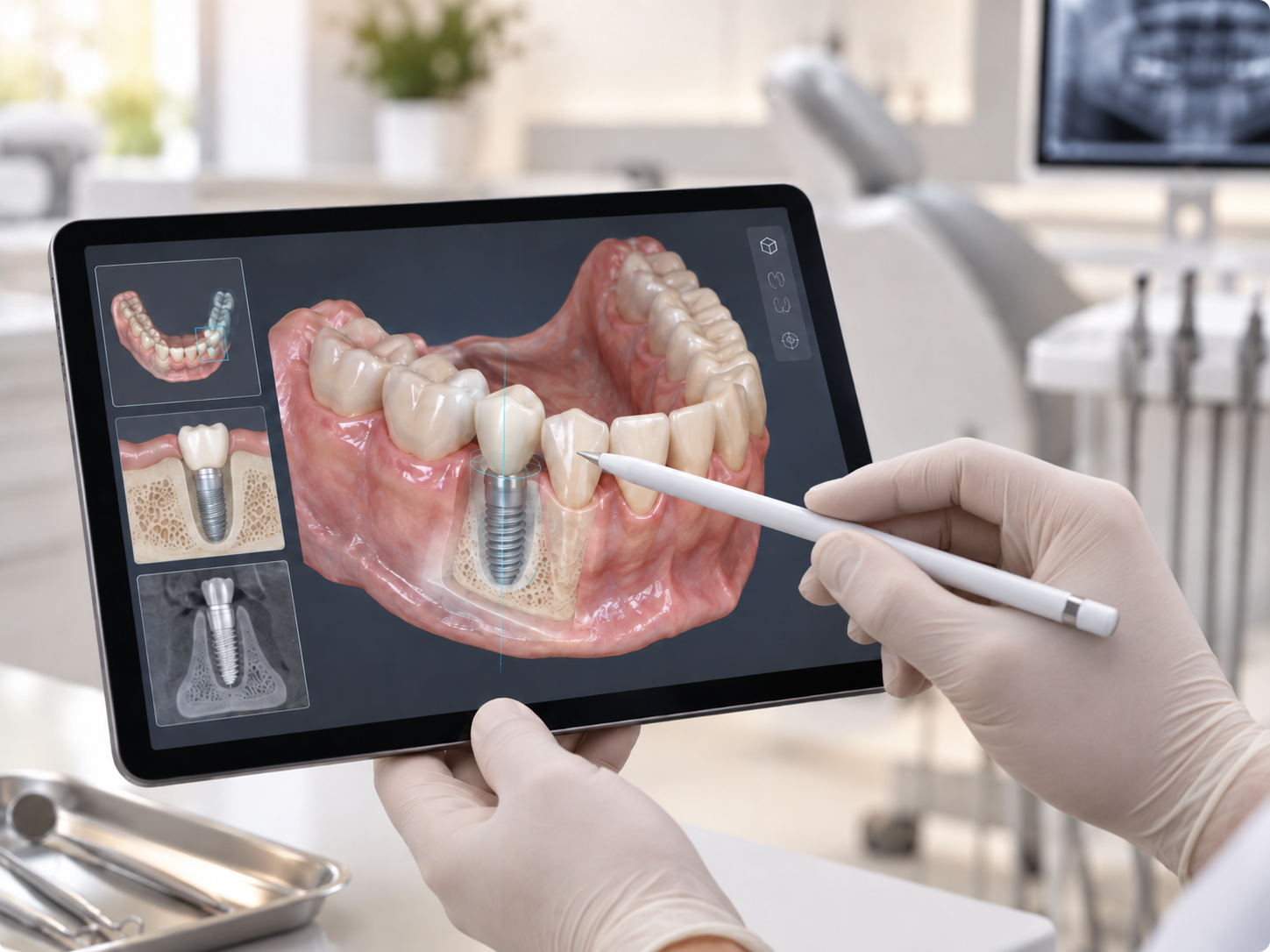
Replace One Missing Tooth
A single dental implant replaces the root of a missing tooth and supports an individually designed dental crown. Unlike a conventional tooth-supported bridge, implant treatment can replace the missing tooth without preparing healthy neighbouring teeth solely to support the restoration. Treatment is carefully planned around your available bone, gum health, bite and the position of the final crown.
- Replaces a missing tooth without relying on neighbouring teeth for support
- Restores a fixed chewing surface
- Crown shade and shape can be planned to complement adjacent teeth
- Helps maintain function in the area of the missing tooth
- Cleaning instructions are personalised around the implant and surrounding gums
- Bite forces are checked before the final restoration is completed
Before & After
Illustrative only. Individual results may vary.
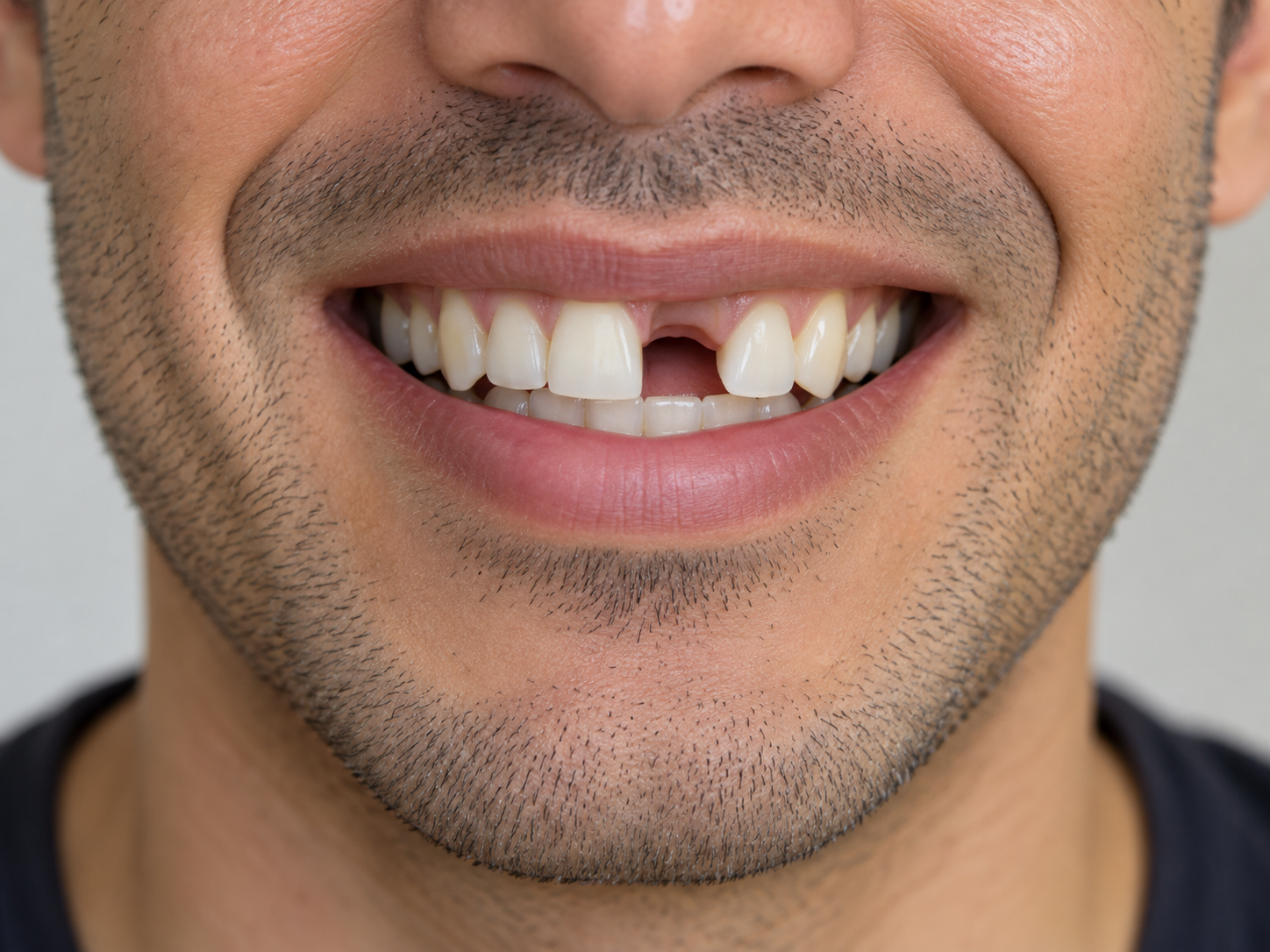
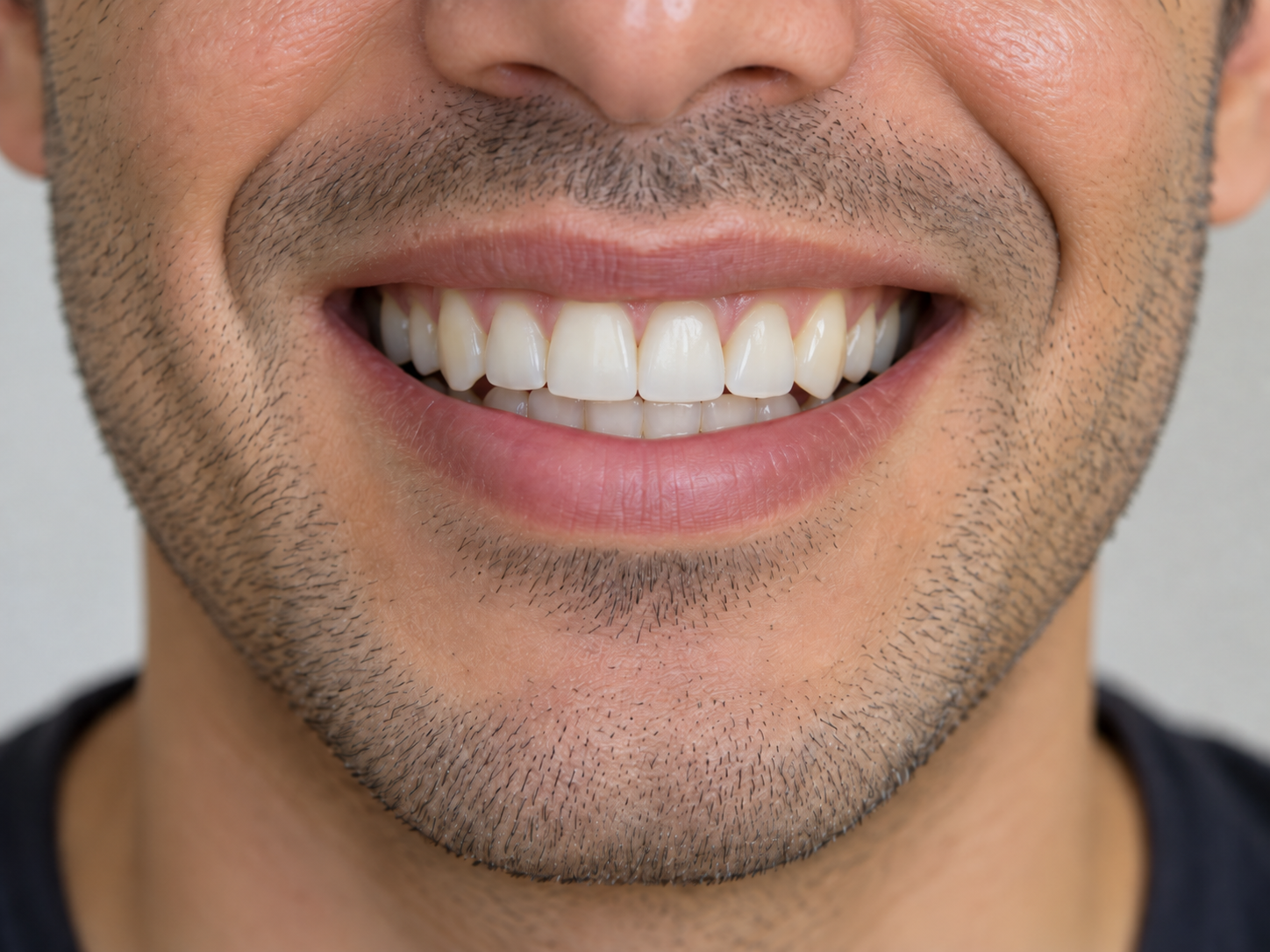
Disclaimer: Illustrative image only. Dental implant outcomes vary between individuals and depend on factors including bone condition, gum health, implant position, healing, bite and maintenance. Results cannot be guaranteed. A clinical assessment and appropriate imaging are required to determine suitability and expected outcomes.
Your dentist examines the missing-tooth area, neighbouring teeth, gums and bite. Appropriate X-rays or 3D CBCT imaging may be recommended to evaluate available bone and nearby anatomy.
The intended crown position is considered before implant placement so that the surgical and restorative stages work together.
The implant is placed into the jaw under local anaesthesia. Additional procedures such as bone grafting are recommended only when clinically required.
The implant is given time to integrate with the surrounding bone. Healing time varies between patients and treatment sites. A temporary tooth may be possible in selected cases.
After healing is confirmed, the custom crown is fitted, the bite is checked and long-term cleaning and maintenance instructions are reviewed.
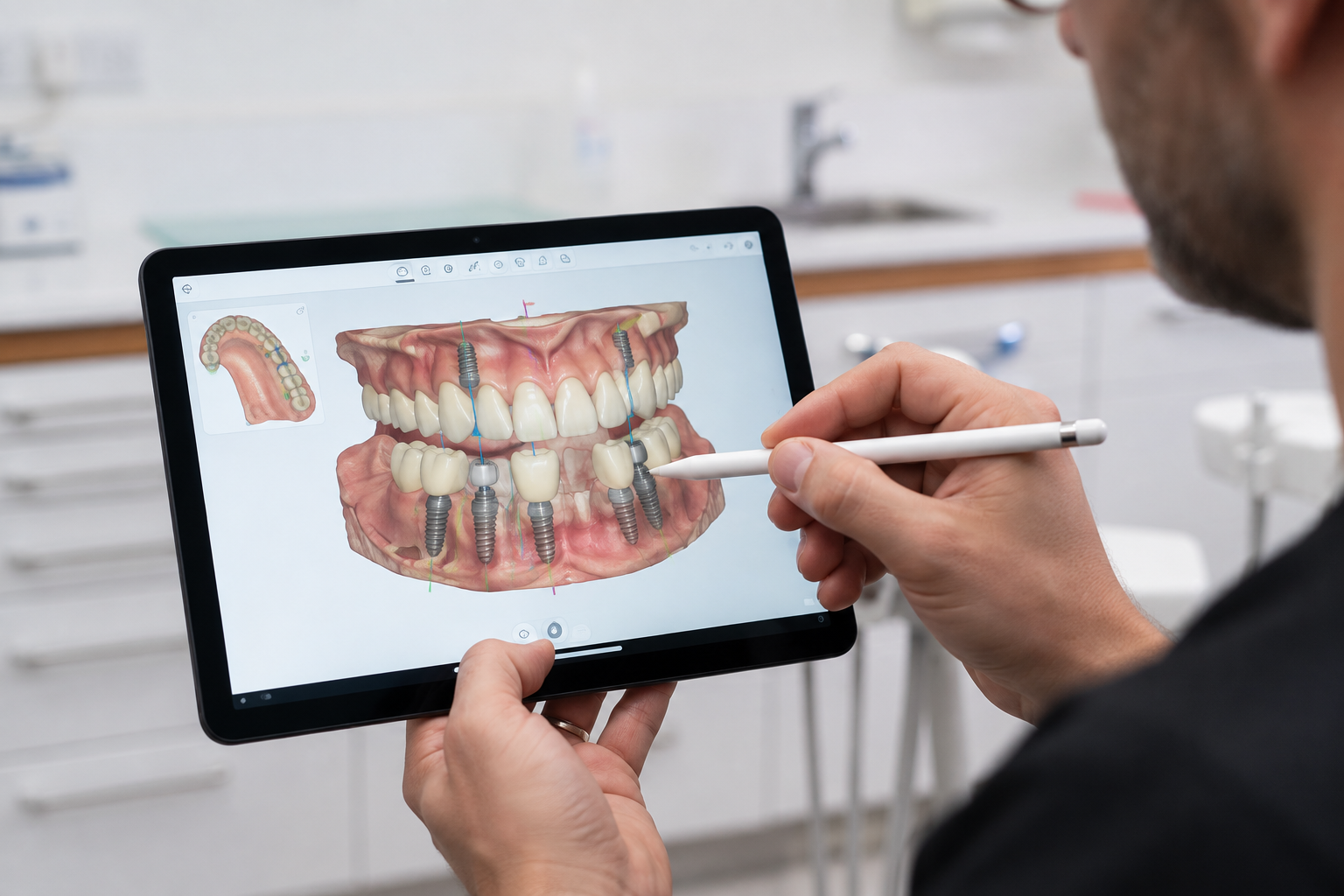
Replace Several Missing Teeth
When several neighbouring teeth are missing, implants can support individual crowns or an implant-supported bridge. One implant is not necessarily required for every missing tooth. The number and position of implants depend on the size of the gap, bone availability, bite forces and the planned final restoration.
- Replaces several missing teeth with a fixed restorative option
- May avoid preparing healthy neighbouring teeth to support a conventional bridge
- Number of implants can be planned according to the restoration rather than automatically placing one per tooth
- Bite forces can be distributed across the implant-supported restoration
- Cleaning access is considered during bridge design
- Treatment can be coordinated with bone grafting when clinically required
Before & After
Illustrative only. Individual results may vary.
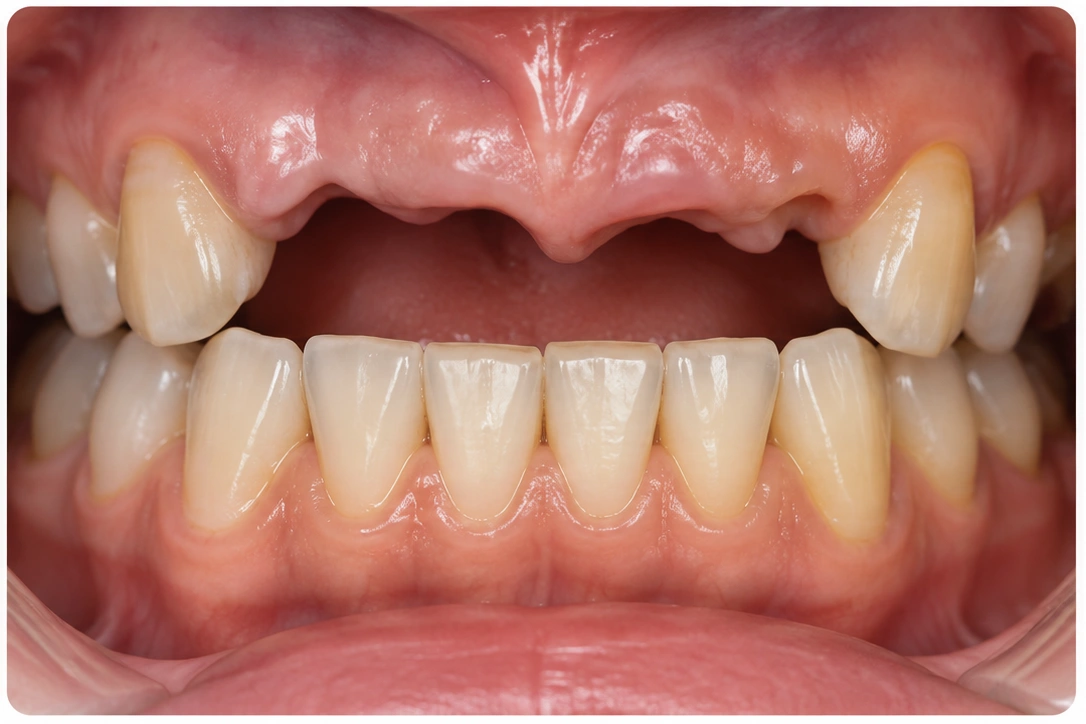
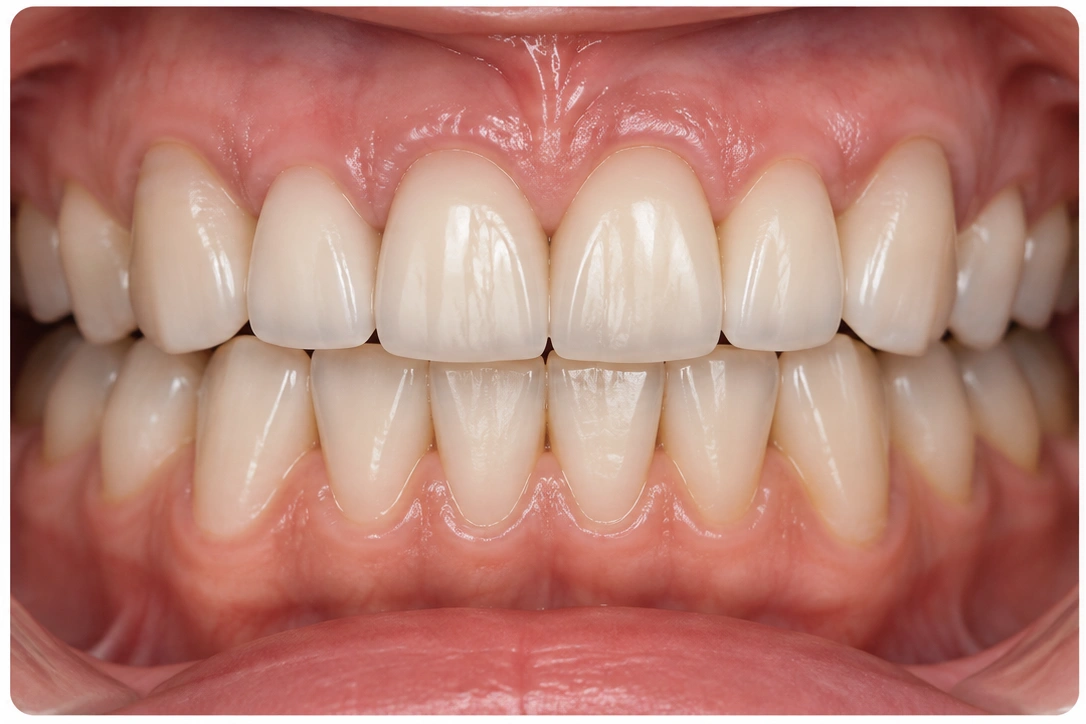
Illustrative image only. Multiple dental implant outcomes vary between individuals and depend on factors including the number and position of implants, bone condition, gum health, bite, healing, restoration design and long-term maintenance. Results cannot be guaranteed. A clinical assessment and appropriate imaging are required to determine suitability and expected outcomes.
Your dentist evaluates the missing-tooth areas, remaining teeth, gums, bite and overall oral health.
Dental scans and appropriate imaging help determine implant positions and the design of the future crowns or bridge.
The planned implants are placed under local anaesthesia. Bone augmentation may be performed where clinically indicated.
Temporary tooth replacement may be used while the implants integrate with the surrounding bone.
The definitive implant-supported crowns or bridge are fitted, the bite is refined and you are shown how to clean around the restoration effectively.
Fixed Full-Arch Tooth Replacement
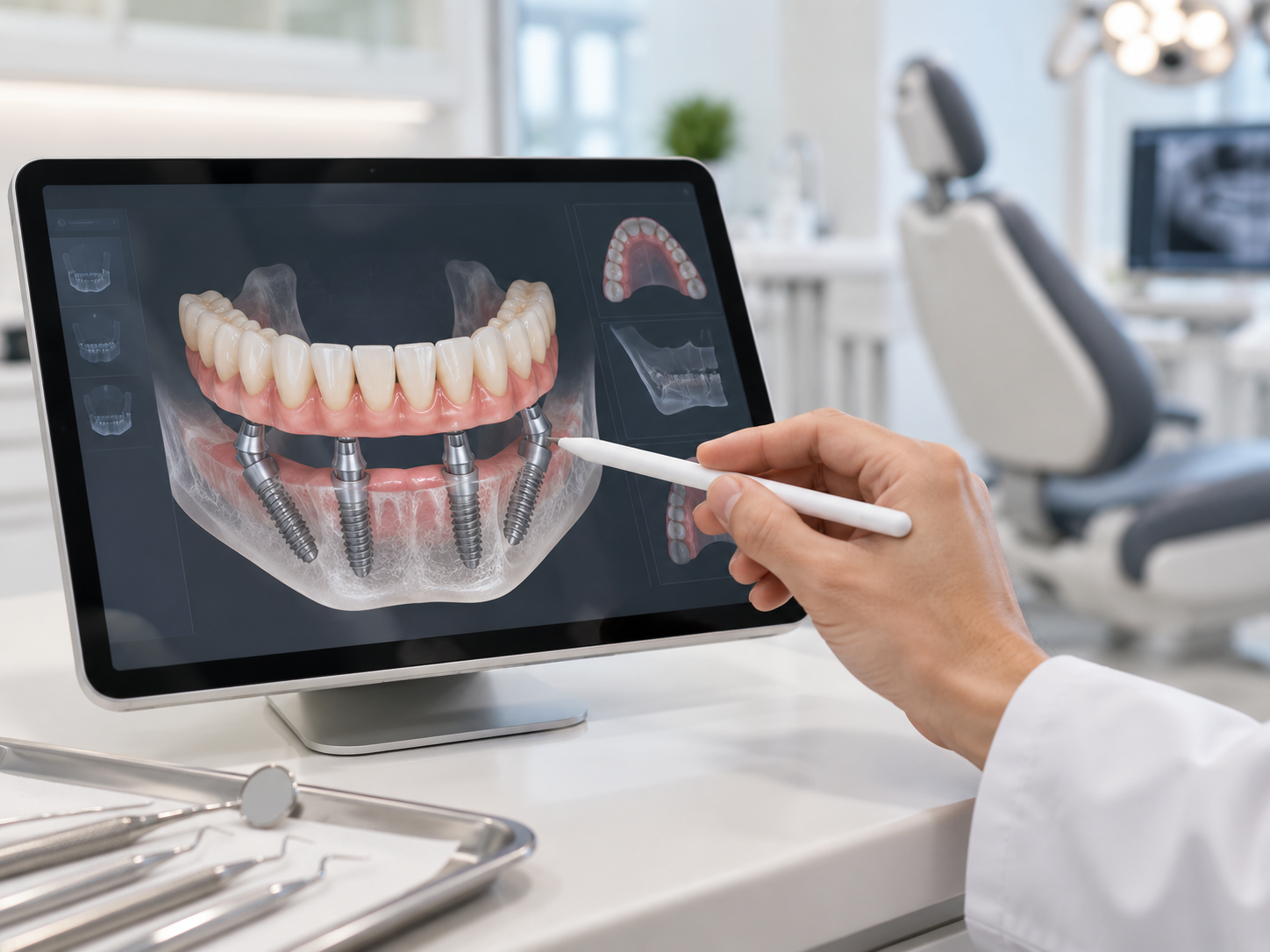
All-on-4 treatment uses four strategically positioned dental implants to support a fixed full-arch restoration. It may be considered for selected patients who have lost most or all teeth in one jaw, have failing teeth or are looking for an alternative to a removable full denture. Detailed assessment of bone, gums, bite, facial support and general health is required before full-arch implant treatment is recommended.
- Replaces a complete upper or lower dental arch
- Uses strategically positioned implants rather than one implant for every tooth
- Provides a fixed alternative to removable dentures for suitable patients
- Restoration design considers smile, speech, facial support and bite
- Cleaning access is planned beneath and around the final bridge
- A provisional fixed restoration may be possible when implant stability and clinical conditions allow
Before & After
Illustrative only. Individual results may vary.
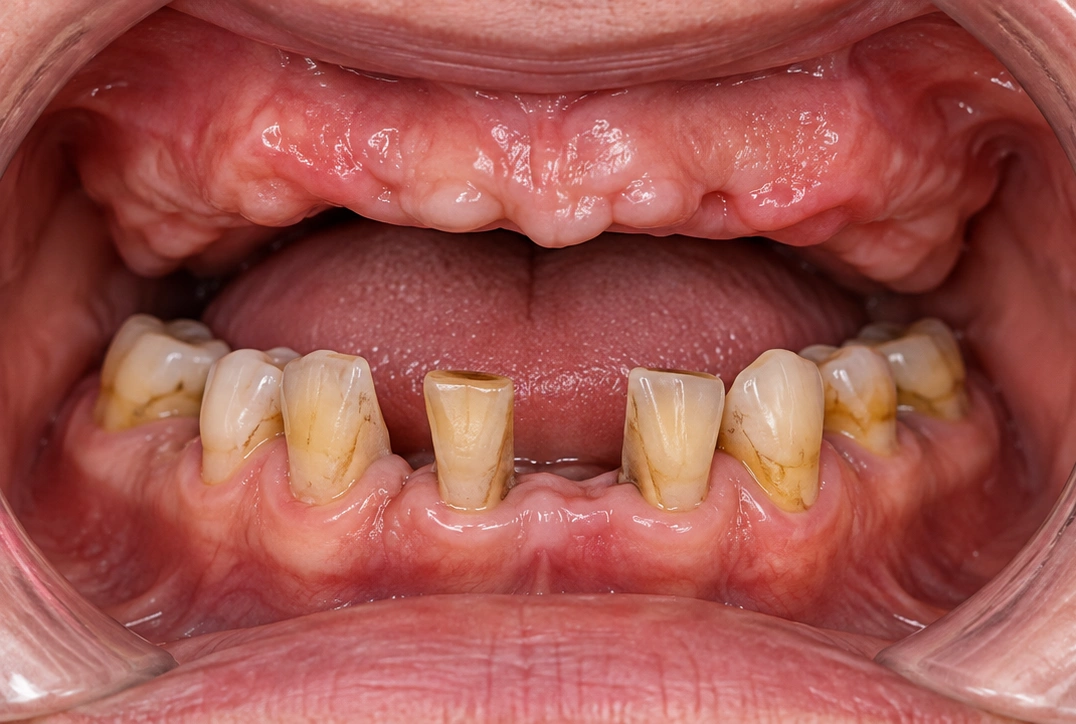
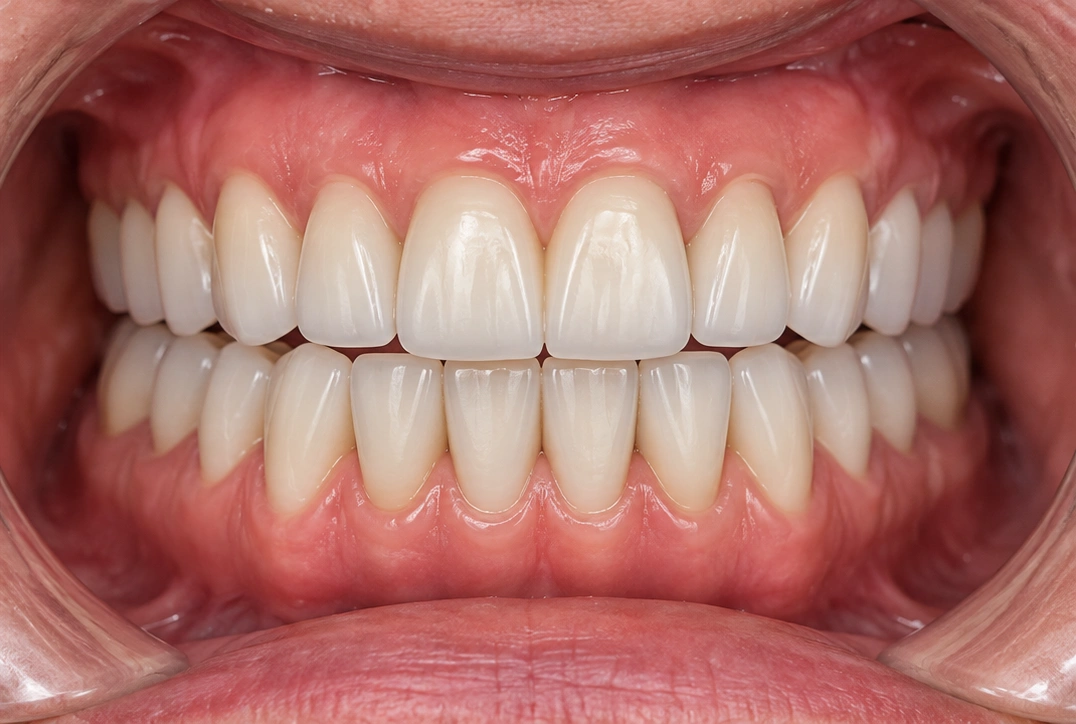
Illustrative image only. All-on-4 implants outcomes vary between individuals and depend on factors including the number and position of implants, bone condition, gum health, bite, healing, restoration design and long-term maintenance. Results cannot be guaranteed. A clinical assessment and appropriate imaging are required to determine suitability and expected outcomes.
Your dentist evaluates the remaining teeth, gums, jawbone, bite, medical history and oral hygiene requirements.
CBCT imaging, dental scans and restorative planning help determine implant positions and the intended final tooth arrangement.
Failing teeth are removed when required and the planned implants are placed under local anaesthesia. Additional surgical procedures depend on your individual anatomy.
A fixed provisional bridge may be fitted when implant stability and other clinical conditions are suitable. Immediate fixed teeth cannot be guaranteed before surgery.
After healing is confirmed, the definitive restoration is completed and adjusted for appearance, speech, bite and cleanability.
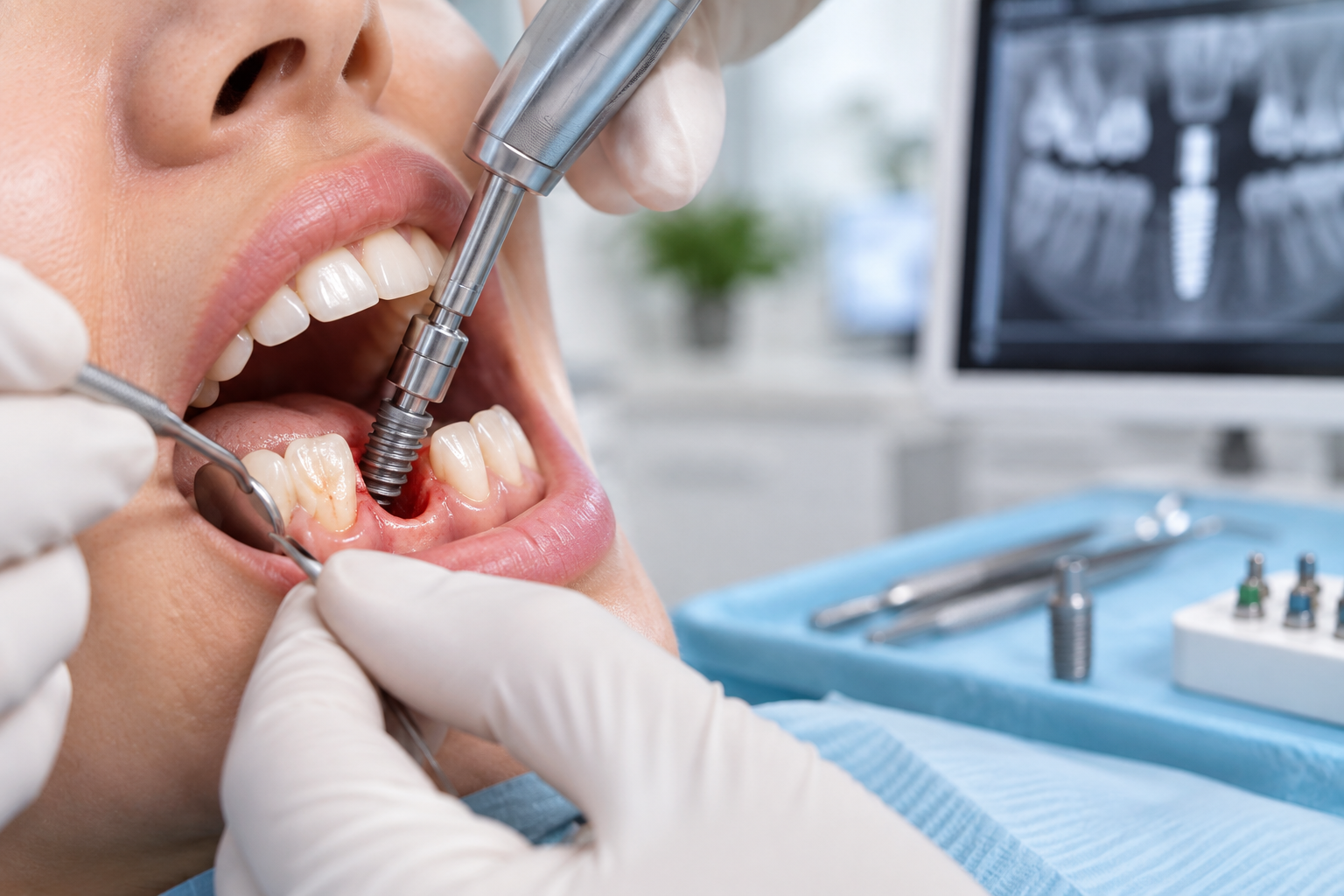
Implant Placement at the Time of Extraction
In selected cases, a dental implant can be placed into the extraction site during the same surgical appointment in which a failing tooth is removed. Immediate placement can reduce the number of surgical stages, but it is not appropriate for every patient or every extraction site. The decision depends on bone condition, infection, gum anatomy and the stability that can be achieved during implant placement.
- May combine tooth extraction and implant placement into one surgical appointment
- Can reduce the number of separate surgical procedures in suitable cases
- May help maintain the existing extraction-site anatomy
- Final treatment timing is based on healing and implant stability
- A staged implant approach remains available when immediate placement is not appropriate
- Temporary tooth replacement is considered separately from implant placement
Before & After
Illustrative only. Individual results may vary.
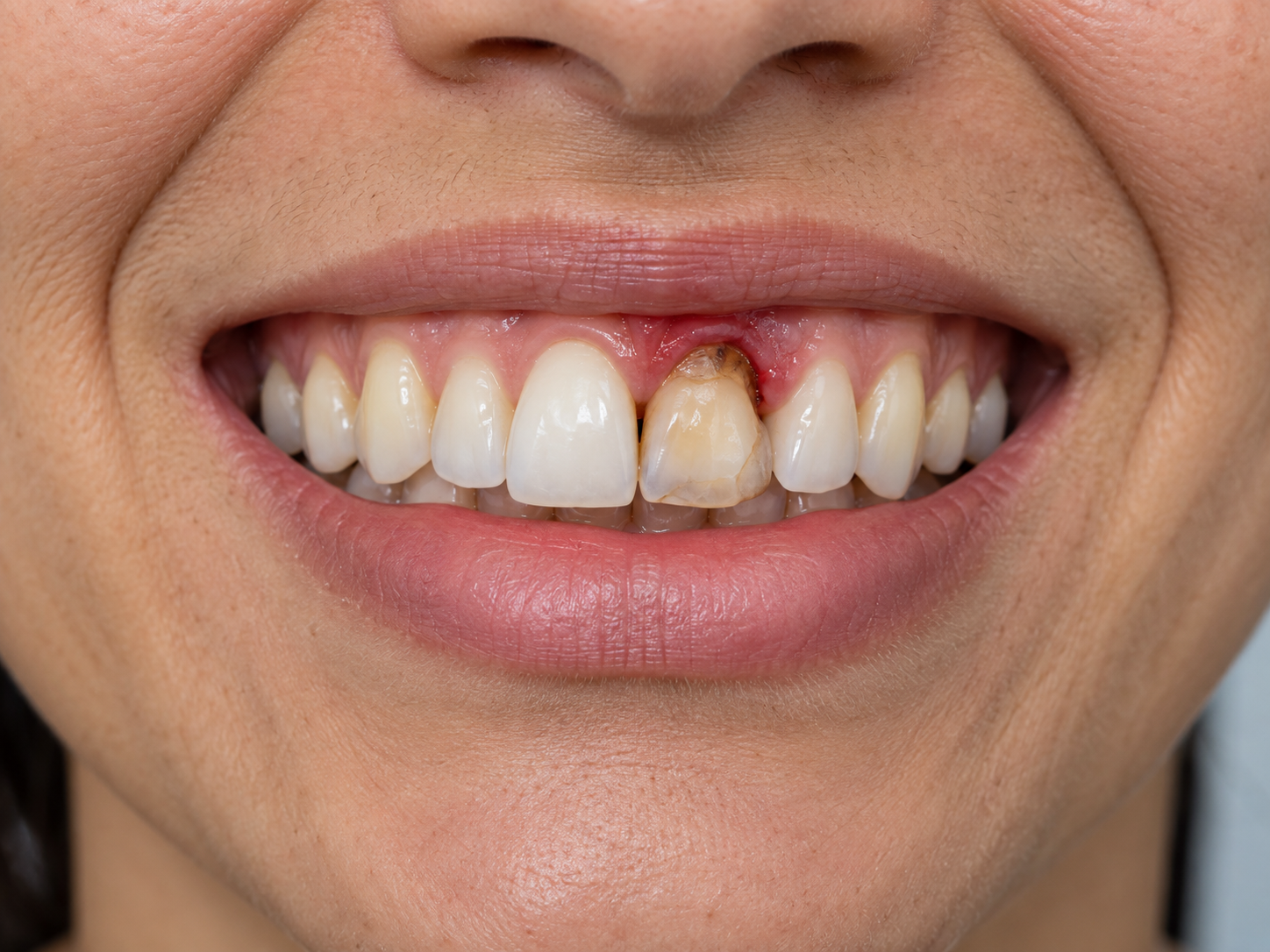
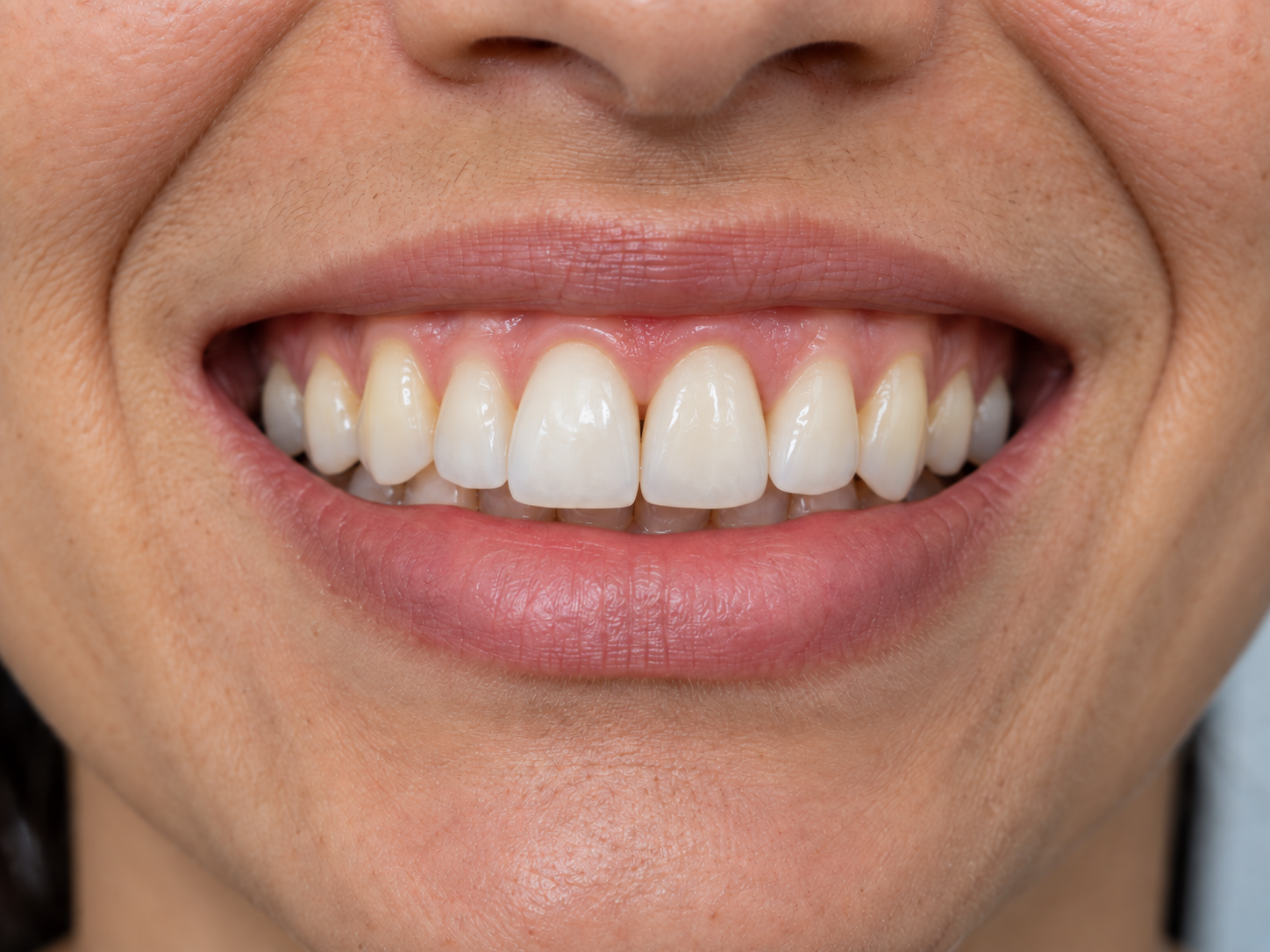
Illustrative image only. Immediate implant outcomes vary between individuals and depend on factors including bone condition, infection status, gum health, implant stability, healing and the final restoration. Immediate implant placement is not suitable for every patient or extraction site, and results cannot be guaranteed. A clinical assessment and appropriate imaging are required to determine suitability and expected outcomes.
Clinical examination and appropriate imaging are used to evaluate the failing tooth, surrounding bone, infection risk, gums and nearby anatomy.
Your dentist discusses whether immediate placement appears suitable and explains the alternative staged approach if conditions are not favourable.
The failing tooth is removed while attempting to preserve the surrounding bone and soft tissues where possible.
The extraction site is examined. If the required conditions are present, the implant is placed during the same appointment. A temporary crown is only used when clinical conditions allow.
After appropriate healing and implant integration, the definitive crown is fitted and the bite and surrounding gum health are reviewed.